
+86-731-85666876
Liuyang High-Tech Industrial Area, Changsha China


Views: 0 Author: Site Editor Publish Time: 2026-08-10 Origin: Site


High-abrasion environments accelerate equipment degradation at alarming rates. In industries like mining, cement, and aggregates, components face brutal daily wear. Material selection for wear parts directly drives operational uptime. Balancing extreme abrasion resistance against impact toughness and strict budgets remains a difficult engineering challenge. Selecting the wrong casting alloy often leads to catastrophic part failure. It can also cause excessive replacement cycles, destroying your maintenance budgets. You must thoroughly understand specific metallurgical properties to make informed procurement choices.
We will explore why Cast White Iron serves as a baseline standard for extreme abrasive wear. You will learn how its unique microstructure handles severe sliding friction. We will also help you evaluate if this alloy matches your specific operational criteria. Finally, you will discover hybrid material alternatives designed to survive complex, high-impact processing zones.
Cast White Iron relies on a high volume of iron carbides, making it exceptionally hard and abrasion-resistant but significantly less ductile than steel or gray iron.
Material selection must align with the wear mechanism: standard white iron excels in pure sliding abrasion, while specialized White Iron And Ni-hard Casting combinations (like Ni-hard 4) offer improved fracture toughness.
For localized extreme wear zones, Casting With Carbide-inserted technology provides a hybrid solution without compromising the entire part's structural integrity.
Supplier evaluation should heavily weight metallurgical consistency, non-destructive testing (NDT) capabilities, and precise heat treatment controls.
Engineers consistently choose specific alloys based on internal microstructure. You must understand the structural difference between standard gray iron and specialized abrasion-resistant irons to make smart procurement decisions. Gray iron forms graphite flakes during the cooling process. These flakes act as natural lubricants. They make the metal incredibly easy to machine. However, they also create internal weak points. The material remains relatively soft.
Conversely, rapid cooling and specific chemistry prevent graphite formation entirely. The carbon bonds directly with iron. It forms cementite, commonly known as iron carbides. Iron carbides are exceptionally hard compounds. Graphite absence provides superior hardness. This metallurgical shift turns a standard casting into an armor-plated wear part. The cementite matrix resists scratching incredibly well.
You must match your alloy to the exact physical wear mechanism. We categorize wear into distinct physical actions. Abrasive wear involves sliding or scratching. Think of wet sand sliding continuously down a steel chute. Standard unalloyed grades handle this pure sliding perfectly. The hard carbides act like microscopic cobblestones resisting the friction.
Heavy impact wear requires entirely different handling. Gouging happens when massive rocks smash directly into a surface. High-impact blows easily fracture rigid carbides. You should never deploy these brittle alloys in primary crushing zones. They remain optimized strictly for continuous sliding friction.
Best Practice: Always conduct a worn-part audit. Look at your discarded parts. Deep gouges indicate impact wear. Smooth, polished channels indicate sliding abrasion. Choose your alloy accordingly.
Procurement teams often struggle to justify higher upfront tooling costs. Creating custom wooden or aluminum patterns requires initial investment. Casting prices typically exceed the cost of standard AR (Abrasion Resistant) steel plates. However, you must measure long-term performance by the cost-per-ton processed.
Foundries pour these parts into near-net shapes. This eliminates heavy fabrication labor on your site. Standard AR plates wear out rapidly under sliding silica. A properly heat-treated casting outlasts AR steel plates several times over. The extended lifespan easily offsets initial pattern investments. Lower replacement frequency means fewer maintenance shutdowns. Your operation achieves a highly favorable economic return over the equipment lifecycle.
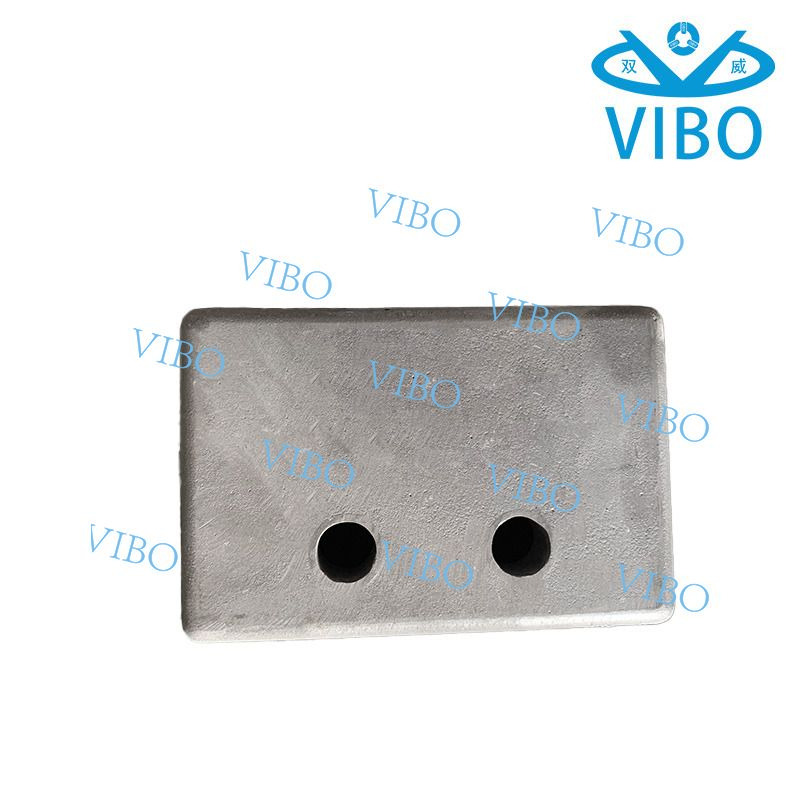
Buyers need solutions beyond standard unalloyed grades. Modern metallurgical foundries offer diverse alloy families. You can tailor hardness and toughness to your specific environment. Understanding these categories prevents premature equipment failure.
The White Iron And Ni-hard Casting category defines a highly successful metallurgical family. Foundries add nickel and chromium to the base iron mixture. Nickel significantly improves overall hardenability. It ensures the casting hardens uniformly from the surface to the core. Chromium prevents soft graphite formation while building durable carbides. This family offers noticeable corrosion resistance alongside extreme hardness. It serves perfectly in wet processing environments.
Why does the industry prefer Ni-hard 4 for severe applications? Slurry pumps and heavy grinding mills destroy inferior metals quickly. Earlier generations like Ni-Hard 1 and Ni-Hard 2 perform well in pure sliding. However, they suffer under sudden impact. They contain continuous carbide networks. A hard blow cracks this continuous network easily.
Higher chromium content shifts these carbides into a discontinuous network. The carbides exist as isolated islands within a tougher matrix. This subtle microstructural change massively improves fracture toughness. The component absorbs minor mechanical shocks without shattering. Engineers specify this exact grade for heavy-duty slurry transportation.
High-Chrome alloys represent another major category governed by ASTM A532 standards. Foundries push chromium content aggressively between 15% and 27%. This process creates primary chromium carbides. These complex carbides are significantly harder than standard iron carbides. They also withstand high-temperature environments.
Cement plants use them to move hot clinker. Highly corrosive abrasive environments require this specific chromium level. The alloy matrix actively resists oxidation while maintaining structural wear resistance.
Sometimes, you need contradictory properties in a single component. Casting With Carbide-inserted solves this dilemma. This bi-metallic technology places ceramic or titanium carbides strictly in targeted strike zones. The foundry pours a ductile base metal around these ultra-hard inserts.
The overall part matrix remains flexible and weldable. Meanwhile, the strike zone achieves extreme hardness. You get localized armor without risking overall structural integrity. This hybrid approach delivers excellent lifecycle economics for highly complex parts.
Alloy Category | Primary Strength | Relative Toughness | Ideal Application |
|---|---|---|---|
Standard Unalloyed | Extreme sliding abrasion resistance | Very Low | Dry sand chutes, simple liners |
Ni-Hard 1 & 2 | High hardness, moderate corrosion resistance | Low | Ash pipes, concrete mixer paddles |
Ni-Hard 4 | Improved fracture toughness, excellent wear | Moderate | Slurry pump impellers, mill liners |
High-Chrome (ASTM A532) | High heat & corrosion resistance | Moderate | Hot clinker chutes, aggressive chemical slurries |
Carbide-Inserted Hybrid | Targeted extreme wear, ductile body | High (Base Body) | Complex crusher components, high-shock zones |
We must maintain engineering skepticism. No single material solves every problem. You must understand where these advanced alloys fail to implement them successfully. Ignoring these technical limitations leads to expensive disasters.
High hardness fundamentally trades away ductility. These castings possess virtually zero ability to stretch or deform under stress. If subjected to high-impact blows, they risk catastrophic shattering. Primary crusher environments generate massive kinetic forces. Large boulders dropping from significant heights easily crack these rigid structures. You should restrict these parts to secondary or tertiary processing stages where particle sizes remain small.
Maintenance teams face a harsh reality. You cannot easily weld these alloys for field repair. The high carbon content makes the metal highly susceptible to thermal cracking. Applying a welding torch creates severe localized stress. The part will almost certainly crack near the heat-affected zone.
You must plan your installation strategy carefully. Parts require mechanical fastening. Engineers design them with cast-in bolt holes or specialized mounting lugs. You bolt them into place rather than welding them. This requires upfront design adjustments.
Do not expect to machine these parts easily. Standard high-speed steel or basic carbide cutting tools fail instantly against these surfaces. The material destroys traditional drill bits in seconds. Foundries must utilize specialized machining techniques.
They use advanced grinding equipment. For complex geometries, they rely on EDM (Electrical Discharge Machining). EDM uses electrical sparks to erode the hard metal slowly. This process extends lead times significantly. It also limits complex geometric tolerances. You should design parts to be used in their "as-cast" condition whenever possible.
Common Mistakes in Implementation:
Attempting to weld lifting lugs onto the casting during installation.
Using an impact wrench aggressively, causing localized stress fractures around bolt holes.
Failing to provide a flat, machined backing plate, causing the brittle casting to snap under bending loads.
Industry leaders do not gamble on unproven applications. They deploy these materials where performance data verifies the economic return. Understanding these proven use cases helps you identify opportunities in your own plant.
Mining operations handle highly abrasive ore continuously. Wet processing creates abrasive slurries that destroy standard steel pipes and pumps. Engineers heavily rely on advanced castings here. Common successful applications include:
Slurry Pump Impellers: Moving crushed ore mixed with water requires superior sliding abrasion resistance.
Mill Liners: Protecting the outer shell of grinding mills from constant internal friction.
Classification Equipment: Cyclones and sizing screens face severe continuous wear.
Cement production involves crushing limestone and transporting abrasive powders. The process also involves high heat during the clinker phase. This environment demands exceptional material stability.
Chute Liners: Transferring abrasive gravel between conveyor belts safely.
Augers and Mixer Paddles: Blending highly abrasive wet concrete without losing dimensional tolerance.
Grinding Balls: Pulverizing raw materials efficiently inside tumbling mills.
Coal-fired power plants move massive volumes of pulverized fuel and ash. Coal dust acts like sandpaper. Post-combustion ash proves even more abrasive.
Pulverizer Parts: Grinding coal into fine powder requires durable crushing rings.
Ash Handling Piping: Transporting abrasive fly ash away from boilers requires abrasion-resistant pipeline elbows.
Industry Segment | Component Type | Recommended Material Grade |
|---|---|---|
Mining | Slurry Pump Volute | Ni-Hard 4 |
Cement | Hot Clinker Chute | High-Chrome (ASTM A532) |
Aggregates | Crusher Strike Plate | Carbide-Inserted Hybrid |
Power Gen | Ash Transport Elbows | Ni-Hard 1 |
Selecting the right foundry determines your ultimate success. You cannot verify internal casting quality simply by looking at the finished part. Bottom-of-funnel conversion requires strict evaluation criteria. Buyers must vet foundries using a rigorous technical framework.
Casting quality begins with chemistry. Foundries melt scrap steel and pig iron to pour new parts. Poor foundries buy cheap scrap contaminated with tramp elements. Lead, tin, or excess phosphorus cause premature casting failure. You must ask how the foundry controls its incoming raw materials. They should sort and clean scrap meticulously before charging the furnace.
The magic happens during heat treatment. The as-cast metal remains relatively soft and structurally unbalanced. The foundry must perform precise quenching and tempering. This process forces the metal into a hard martensitic matrix without inducing thermal cracking. A foundry lacking modern, computer-controlled heat treatment ovens will produce inconsistent batches. Some parts will wear out quickly. Others will shatter randomly.
Demand documented proof of quality. Do not accept verbal assurances. A professional foundry utilizes advanced non-destructive testing (NDT). They should provide:
Spectrometry: Validates exact chemical composition before pouring.
Brinell/Rockwell Testing: Confirms surface hardness meets engineering specifications.
Ultrasonic Testing: Scans the casting interior for hidden shrinkage voids or gas porosity.
Discuss tooling upfront. Who owns the wooden or aluminum pattern after production? Make sure your contract clearly states you own the tooling. Ask about pattern storage conditions. Wood patterns warp in high humidity. Discuss production scalability. A good supplier handles small pilot runs before scaling up to massive replacement orders. Clear communication regarding lead times prevents unexpected plant downtime.
Cast white iron and its advanced alloy variants offer unmatched abrasion resistance. They outlast standard steel plates significantly in high-friction environments. However, achieving these results requires precise alignment with your operational wear mechanisms. You cannot treat these alloys as drop-in replacements for flexible steel. You must respect their brittleness and design your mechanical mountings accordingly.
Before requesting quotes from a foundry, audit your current failed wear parts. Determine clearly whether they suffer from heavy impact gouging or smooth sliding abrasion. Document your operating temperatures and chemical exposures. This data allows metallurgists to specify the exact grade required for maximum lifespan.
Are you ready to stop replacing the same parts every month? Gather your operational data and engineering drawings. Submit them to a qualified foundry for a complete metallurgical consultation, custom material recommendation, or a precise casting quote.
A: Only through specialized grinding or using advanced polycrystalline cubic boron nitride (PCBN) tools. Traditional turning, milling, or drilling with high-speed steel or standard carbide bits is generally not viable. Foundries often rely on Electrical Discharge Machining (EDM) to achieve tight tolerances on complex geometries.
A: Ni-Hard 4 contains higher levels of chromium and lower carbon than Ni-Hard 1. This chemical shift alters the microstructure. It creates a discontinuous carbide network, resulting in better impact toughness and resistance to spalling compared to the highly brittle, continuous carbide structure found in Ni-Hard 1.
A: Choose carbide inserts when the component faces localized extreme wear, but the overall part requires ductility. The ductile base metal absorbs structural shock and handles mechanical mounting stresses safely, while the ultra-hard inserts protect the specific high-friction strike zones from rapid degradation.
A: White iron castings offer significantly longer wear life in continuous sliding abrasion due to their embedded iron carbides. However, AR plates remain much tougher, are easily weldable, and are far better suited for heavy impact zones where brittle castings would quickly shatter.

